


![]() |
Quality Instrumentation for the Life Sciences |
|
|
|
|
FAQ's for SBA, EGM
& WMA CO2 Gas Analyzers FAQ's for CIRAS Portable Photosynthesis System FAQ's for TPS Photosynthesis System
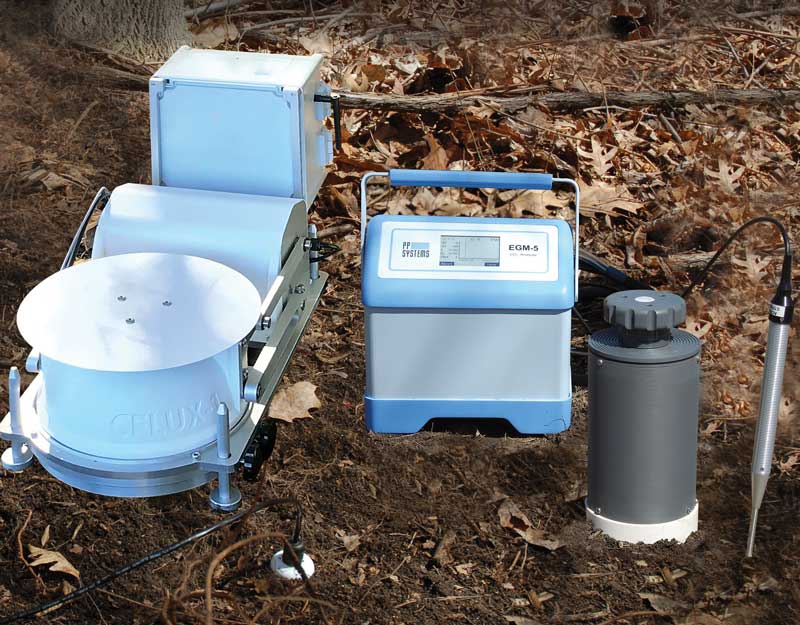
SBA/EGM/WMA CO2 Gas Analyzer FAQ'sWhat is the measurement range of your CO2 analyzers? We offer the following standard ranges with all SBA, EGM and WMA analyzers: Low Range: 0-1,000 (0.1%), 2,000 (0.2%), 5,000 (0.5%), 10,000 (1%) and 20,000ppm (2%) High Range: 50,000 (5%), 100,000 ppm (10%). The range must be specified at time of order. Do your CO2 gas analyzers record an average reading over a set time or does it record an instantaneous reading when it stores the data? The user has the ability to control the averaging method employed by the analyzer for smoothing/filtering purposes. The internal data rate is 1.6 seconds. There are two types of software averaging that can be optionally implemented to improve resolution and reduce fluctuations: Running Average: This is an exponential running average algorithm with a time response to a step change of 5.6 seconds to 66% of final value and 26.4 seconds to 99% of final value. If a new instrument reading differs from the current running average by more than the AVLIMIT value, a new running average is begun. Thus when the CO2 concentration is changing rapidly, the averaging is eliminated and the instrument can track changes at the basic instrument data rate of 1.6 seconds. When the AVLIMIT is set to 0, no running average is performed. The default AVLIMIT is 0.3% of full scale or 6 ppm for a 2000 ppm instrument. The running averaging is applied to displayed data, recorded data and analog output signals. Numeric Average: This is a straightforward average of a defined number of consecutive readings. This is only available when record mode is set to Automatic (WMA and EGM), and then applies only to recorded data. AV READ NUMBER defines the number of readings that will be averaged and can be set from 0 to 140, however, the upper limit on AV READ NUMBER is automatically reduced to the record time interval divided by the instrument data rate of 1.6 sec (For record time interval of 2 min, AV READ NUMBER is upper limit is 120 sec/1.6 sec = 75). What effect, if any, does NaOH have on the analyzer? If the NaOH solution entered the analyzer, then there would be damage. We would recommend an inline drop out trap followed by an inline hydrophobic filter. The first would protect from liquid and the second would protect from fine droplets which should be OK. However, if there's any liquid NaOH about in the gas circuit, there will be no measurable CO2. Also note, soda-lime is a mix of sodium and calcium hydroxides. Does the SBA have data logging capabilities? No. It is designed as an OEM CO2 analyzer that provides analog and digital output of CO2. The latest model (SBA-4) also features a 4-20 mA output (not available on previous models). What is the current draw of the SBA OEM CO2 Analyzer? In zero mode, the current draw is ~ 220 mA and during normal operation, ~ 180 mA. What is supplied with the SBA? The SBA is supplied as a bare bone analyzer (PC Board and IRGA). It requires a sampling pump, zeroing unit (i.e. absorber column with soda lime) and 12 V DC power supply. Normally, these additional items (especially 12V DC power supply) are supplied by the end user. However, PP Systems can supply a suitable sampling pump and absorber column (for ZERO) if required. What is required to power the SBA? A 12V DC power supply is all that is required to power the SBA. Is it possible to change the range of my SBA after receipt? On early SBA models, the answer is No. The unit would have to be returned to the factory and is quite costly. It is more feasible to simply purchase another new unit with the required range. For our latest model (SBA-4), we can very easily change the range if required. I heard that your analyzers are very stable over long periods and do not require frequent recalibration. Why is this? All of our CO2 analyzers feature an innovative, built-in Auto-Zero facility which ensures analyzer stability over very long periods. Typically, one recalibration check every few months is more than adequate. It is very important to make sure that the soda lime desiccant is kept fresh to ensure calibration and stability of the analyzer. If the soda lime is exhausted, this will result in an incorrect analyzer zero and will affect CO2 calibration requiring recalibration. Can I control the "Auto-Zero" interval? Yes. In addition, the “Auto-Zero” can be suppressed by the user if required. Are there any sensitivity issues with the SBA? Yes, with older SBA's. Early SBA's are sensitive to temperature, pressure and foreign gas broadening (i.e. water vapor). In high humidity operating environments, the sample should be dried before entering the SBA analyzer (i.e. a column of drierite). However, the latest version of the SBA (SBA-4) features automatic temperature and pressure compensation as standard. Can you cause damage to the SBA-4 CO2 analyzer at RH>90%, or will it only affect the measurement? High water vapor content will not cause any
damage to the instrument unless there is condensation. Condensation
is unlikely under normal conditions because the optical cell is
heated to 50 °C. Just make sure that you don't get any liquid water
into the gas inlet or the optics will be badly degraded and require
replacement. What kind of effect would high humidity (> 90%) have on the SBA-4 auto-zero cycle? The auto-zero function will work without regard to humidity. It would be best to have the zero-CO2 gas at the same humidity as the sample gas (as would occur if a soda lime absorber is used to eliminate CO2, rather than using a supply of dry 100% nitrogen), but not essential since the dilution effect and the pressure broadening effect does not occur at zero CO2 . If we connect an RH probe (or other sensor) to the SBA-4 circuit board, can we get the output voltage through the analog pin, or can we only get it through the digital output? There is only one analog output on the SBA-4
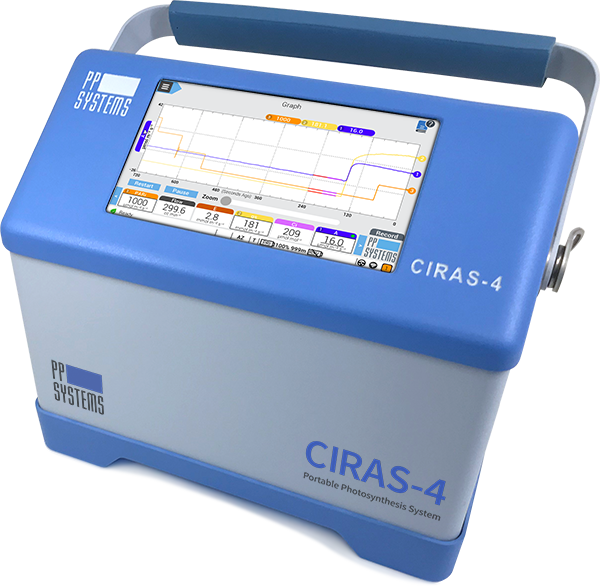
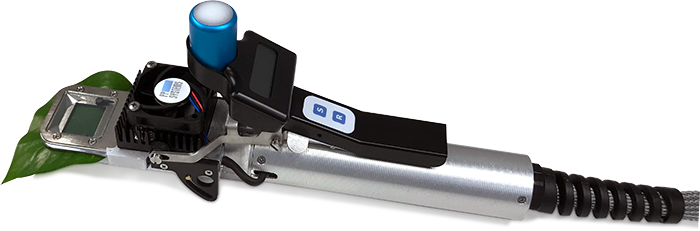
board and it is used to output CO2. A new CO2 value is calculated and output to the analog and digital outputs at 1.6 sec intervals. The internal sampling rate of the sensor is higher, but response time of the SBA-4 is typically limited by the time it takes for new gas sample to flow through and fill the sampling cell. The cell is only 2.5 cc and can be filled in 0.3 secs at a flow rate of 500 cc/min, but the tubing from the user environment to the cell can easily increase that time by an order of magnitude. Can I inject static samples into your analyzers? You can with our SBA-4 and EGM-4 only. With the EGM-4, the internal pump can be disabled for "static" measurements. We recommend that the sample volume be at least 8-10ml to ensure good measurement. Do your CO2 gas analyzers include sampling pumps? Our EGM-4 and WMA-4 analyzers include sampling pumps as standard. The pump in the EGM-4 samples at a fixed rate of approximately 350 ml/min. The WMA-4 has an adjustable pump from 200-1,200 ml/min. The SBA-4 does not include a pump but we can supply both a sampling pump and associated hardware for the SBA-4 if required. What are the standard outputs on your CO2 analyzers? All CO2 gas analyzers include both digital (RS232) and analog outputs including 4-20mA. CIRAS Portable Photosynthesis System FAQ'sCan the CIRAS-2 measure chlorophyll fluorescence? Yes, when it includes our optional Chlorophyll Fluorescence Module (CFM). The CFM, developed in cooperation with Hansatech Instruments, is integral to the system and features the pulse modulated measurement technique. When supplied, the CIRAS-2 is capable of automated, simultaneous measurement of leaf gas exchange and chlorophyll fluorescence. Can the CIRAS-2 be used for measurement of soil respiration? Yes, we offer both closed (SRC-1 Soil Respiration Chamber) and open (CFX-2 Soil Respiration Chamber) chamber for measurement of soil CO2 flux. Our open style chamber (CFX-2) requires a suitable air supply unit which can either be user supplied or we can supply our own (Control Interface Module (CIM)). Do you supply different cuvettes for different leaves? Yes. We supply a full range of cuvettes for measurement on all types of leaves including broad, narrow, conifers, grasses, pods, lichens/mosses, etc. See Leaf Cuvettes. Do your cuvettes have interchangeable heads? No. All of our cuvettes are independent of one another and truly plug and play. However, we do offer a head plate set which is very low cost and allows users to easily convert from a PLC5 (Conifer) to a PLC5 (Narrow) leaf cuvette. What is the temperature control range of your automatic cuvettes? Approximately 8oC below ambient up to 40o C. In comparison to our competitors, we offer the widest range of temperature control. I have one of your automatic leaf cuvettes with automatic light control? Can I disable temperature control? Yes. You have the option to either disable temperature control completely or track ambient if required. I have one of your light units. Can I make measurements under "ambient" conditions? Of course. All of our light units are designed to be removed if necessary to allow for measurement under ambient conditions. Can the CIRAS-2 be operated remotely from a PC? Yes. We supply software with every system which will allow remote control operation of the entire system from your PC computer. This is ideal for long term Laboratory studies (A/Ci curves) and for teaching purposes. How long will the internal batteries power the entire system? The CIRAS-2 is supplied with three 12V NiMH batteries as standard which should provide enough power to operate the entire system for one full day (up to 8 hours). Batteries can be changed very easily in the field without having to shut the system down. Battery life is heavily dependent on the ranges of temperature and light control used during measurements. Can the CIRAS-2 be used as a stand-alone Gas Analyzer (with no cuvettes). Yes. TPS Portable Photosynthesis Systems FAQ'sHow does the TPS-2 compare with your CIRAS-2? There is a big difference! The CIRAS-2 is a "true differential" analyzer featuring 4 independent IRGA's (2 for CO2 and 2 for H2O). The CIRAS-2 is designed for high level research with fully automated control and measurement capabilities. The TPS-2 is a low cost system that is ideal for basis research and teaching. It features a single IRGA for CO2 and a high precision humidity sensor for measurement of H2O and is based on a "gas switching" measurement principle. Unlike the CIRAS-2, the TPS-2 features limited, manual control of CO2, H2O and light (optional). Can you control CO2 and H2O for response curves? Yes. We offer manual control of CO2 (6 steps) and H2O (4 steps) from ambient levels downwards to 0. For control above ambient, this is possible if using a gas cylinder of higher concentration and by wetting the external air. Can you control light intensity? Yes, if you have our optional LED light unit. What is the TPS-2 battery life? Each TPS-2 is fitted with a 12V lead acid battery which should provide power up to 8 hours. Do you offer different style leaf cuvettes for use with TPS-2? No. We offer just one cuvette (PLC4 (B) Broad Leaf Cuvette). UniSpec FAQ'sWhat is measurement range of your UniSpec? For vegetation reflectance, our most common range is 310-1,100nm (VIS/NIR). We do offer other detectors on request (190-730nm UV/VIS, 190-380 UV). Which instrument is better suited for leaf level reflectance? Our UniSpec-SC (Single Channel) was specifically designed just for this application. It is field portable, includes an internal light source and can be supplied with accessories for measurement on a wide range of leaf species from broad leaves to individual conifer needles. Which instrument is better suited for canopy level reflectance (remote sensing)? Our UniSpec-DC (Dual Channel) was specifically designed for this application. It is portable, features two detectors (one for measurement of incident light and one for reflected light) and is capable of measurement under changing ambient conditions. It is commonly supplied with accessories such as straight fiberoptics, FOV lens and cosine receptor. Does the UniSpec-DC have a built-in light source? No. This is because it normally is used for canopy level reflectance measurements under ambient conditions. Can the UniSpec-SC be used for "remote sensing" applications? Yes. The UniSpec-SC can be supplied with accessories for remote sensing applications if required.
|
| Copyright
© 2007 PP Systems.
|